
DAILY DEVOTIONAL
Wednesday, November 21, 2018
The collectors of the two-drachma temple tax came to Peter and asked, “Doesn’t your teacher pay the temple tax?” “Yes, He does,” he replied. When Peter came into the house, Jesus was the first to speak. “What do you think, Simon?” he asked. “From whom do the kings of the earth collect duty and taxes—from their own children or from others?”
“From others,” Peter answered. “Then the children are exempt,” Jesus said to him. “But so that we may not cause offense, go to the lake and throw out your line. Take the first fish you catch; open its mouth and you will find a four-drachma coin. Take it and give it to them for my tax and yours.” – Matthew 17: 24-27
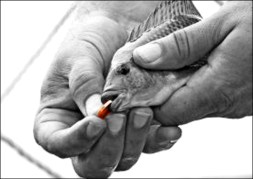 Possibly one of the enigmatic moments recorded in the Gospels, this question about paying the tax to pay for Herod’s massive Temple project. Peter answers the tax collectors with a confident “Yes, my rabbi does pay the Temple tax” But then on his return, Christ challenges Peter … “Have you considered this Temple tax in this way.” A teaching moment, most likely, but then that almost cynical statement …”Go fishing and you will find the money for the tax in the mouth of a fish!” What is this … a miracle of a more magical kind?
Through the years I have pondered the meaning of this strange conversation. In the end, it appears that Christ and Peter will go ahead and pay the Temple tax. Yet … Christ argues that the people ought to be exempt from this taxation ordered by King Herod. It is as if He is implying that any temple should be built out of the generosity of the people and not by dictate of a corrupt king. But in order to keep the peace … the Lord will provide the means to pay the tax.
In this discourse with Peter the fisherman, the emphasis is that the Lord will provide … even for this questionable Temple tax. For if there is to be a Temple, it is the Lord who provide for its construction in spire of the questionable intent of the King.
And what do I learn from this strange matter of the Temple tax and fish with coins in their mouths? The Lord will provide in spite of our questions and moral dilemmas.
Always in Christ’s Service,
Fr. Charitas de la Cruz

 Christ with this teaching is not emphasizing a Biblical Law, or bringing it back to mind, but rather is about scribes and Pharisees, Sadducees and others who used holy scriptures to justify their callousness of heart. This law of divorce applied only to men who treated their wives as property, there is no counterpart from the perspective of the woman. In this very way, it is unjust in its text. Christ characterizes this law of divorce as a means of dealing with a man’s callousness of heart.

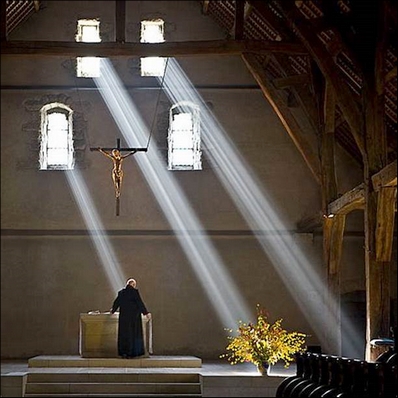 In these my contemplative years, I seek to live in such a way with such transparency that people can catch a glimpse of Christ by looking through the window of MY life. Oh, the image of Christ is probably rather dim and distorted, but I do pray that others can somehow sense that they see Him. And in our prayerful conversations these Greeks and I somehow will sense they are conversing with Christ. I call these moments when Christ is manifest in the conversation of souls, interpersonal communion, the Christ within the Christian calling forth the Divine Image that is latent in the Creation of all souls.
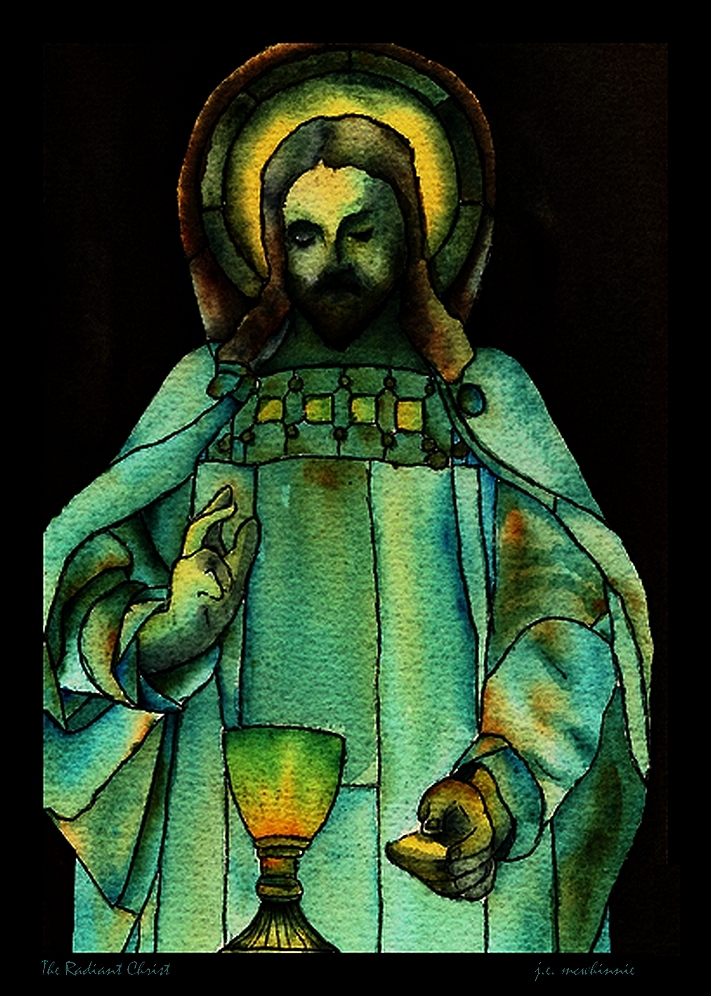 s a Light to the world, what might that mean? The shining example, but an example of what? The guiding light, but guiding who and to where? The lamp in the night, but for what purpose. The shining example … of love and mercy. The guiding light … to both home and promised lands. The lamp in the night … to behold more clearly both truth and wisdom.
 When Jesus had entered Capernaum, a Roman military officer came to Him, asking for help. “Lord,” he said, “my servant lies at home paralyzed, suffering terribly.”
 Into the Sacred Hills of Jade