
DAILY DEVOTIONAL
Friday, August 10, 2018
John the Baptist’s disciples told him about all these things. Calling two of them, John sent them to the Lord to ask, “Are you the One who is to come, or should we expect someone else?”
When the men came to Jesus, they said, “John the Baptist sent us to you to ask, ‘Are you the one who is to come, or should we expect someone else?’”
At that very time Jesus cured many who had diseases, sicknesses and evil spirits, and gave sight to many who were blind. So He replied to the messengers, “Go back and report to John what you have seen and heard: The blind receive sight, the lame walk, those who have leprosy are cleansed, the deaf hear, the dead are raised, and the good news is proclaimed to the poor. Blessed is anyone who does not stumble on account of me.” – Luke 7:18-23
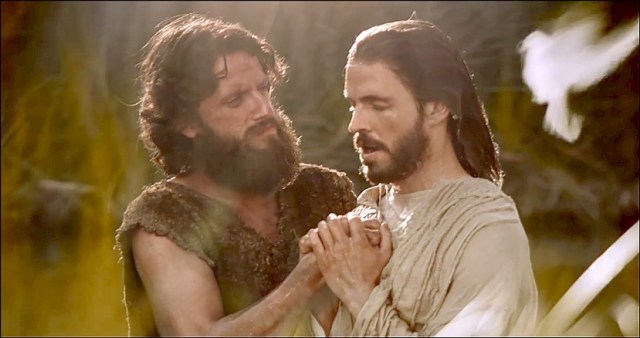
It does not usually come to mind but Jesus’ cousin, John the Baptist, also had disciples. Also, it is striking that John the Baptist is not absolutely confident that Christ is the One to whom John had proclaimed would come. Even in people of great faith, even those ordained by God for a mission, there can be moments of uncertainty.
Jesus reassures John’s disciples that He is fulfilling the messianic promise … restoring clear vision to the blind, strengthening the legs of the lame, cleansing lepers of that which caused them to be banished, enabling the deaf to hear what they have not heard before, reviving the dead and giving them new life, and bringing good news to the poor. And it seems that the reassurance given by Christ was reassurance enough for John.
But I want to spend a few moments to contemplate that enigmatic phrase that concludes Christ’s words to John and his disciples, “Blessed is anyone who does not stumble on account of me.” What exactly does it mean? Why are these words spoken in that moment?
Blessed is anyone who does not stumble on account of me. I sense it is placed here to reassure John’s disciples that He does intend to abandon the ethic and cause of their mentor, John the Baptist. It is as if He were saying to them …”You were not wrong in following John but I am here to carry the mission forward to its fulfillment. Steady your faith, do not become defensive in protecting John’s ministry, do not become jealous, do not become fearful, give it time … you will understand.”
An aspect of faith is the willingness to give matters their necessary time. In God’s Realm, from the beginning of Time to the ending of Time, the wisdom and ways of God unfold. God works most often in an evolutionary manner rather than a revolutionary manner, allowing the fullness of time to provide the harvest.
Loved Ones, do not let new insights and new possibilities frighten you … for the faith keeps unfolding as time goes by.
Always in Christ’s Service,
Fr. Charitas de la Cruz



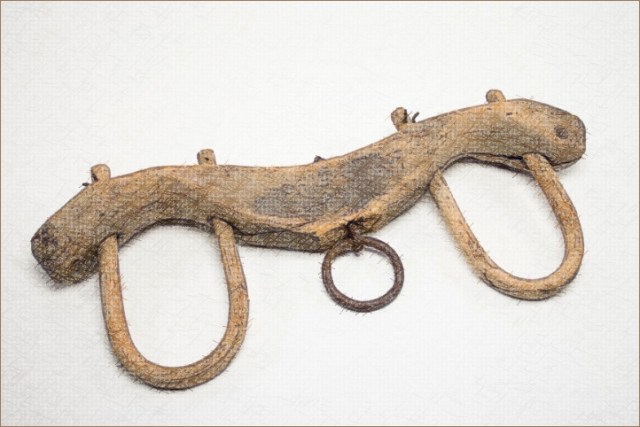 Clergy when in traditional vestments usually have a length of cloth draped over their shoulders. This vestment called a “stole” is actually a symbolic representation of a yoke placed around a beast of burden. It is the symbol of ordination that signifies that this soul now does the work of the Lord as a pastor and preacher. Obviously, this is drawn from this passage in the Gospel of Matthew …”Take my yoke upon you, and learn from me … learn from teachings and the echoing of my teachings, learn from doing the work I send you now to do, learn from being obedient in the practice of holy Love, learn from the moments you will experience in my service.”
 Why do you see the speck in an other person’s eye, but do not notice the log in your own eye? Or how can you say to another person, ‘Let me take the speck out of your eye,’ while the log is in your own eye?
 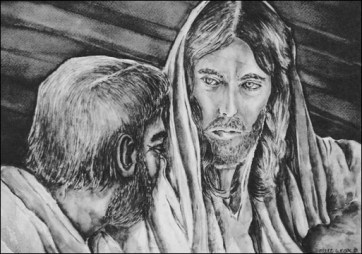 Christ seems rather harsh with Peter. How was Peter to surrender to the sense of fatalism! Why must this be? Yes, Christ seems rather harsh with Peter, especially when Peter is expressing his loyalty and devotion so nobly. Yet … Christ is rather abrupt and confrontive of Peter, “No, Peter, you following the ways of the Deceiver, using declarations of noble cause to thwart the wishes and ways of God. You are thinking like the world thinks and not how heaven thinks.”
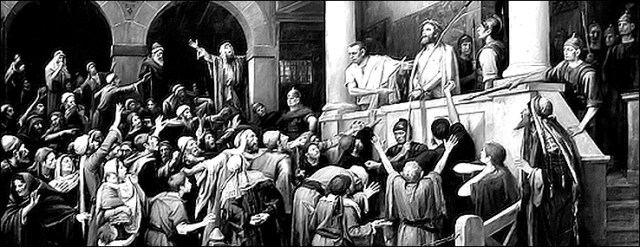 “Do you want me to release to you the king of the Jews?” asked Pilate, knowing it was out of self-interest that the chief priests had handed Jesus over to him.
  Into the Sacred Hills of Jade