
DAILY DEVOTIONAL
Tuesday, May 8, 2018
Why are there so many divisions among us?
At the close of the parable that we commonly refer to as The Parable of the Prodigal Son (though it might more accurately called The Parable of the Unforgiving Brother), we have this interaction between the father and the older brother ….
”The older brother then said, ‘But when this son of yours who has squandered your property with prostitutes comes home, you kill the fattened calf for him!’ To this the father responded, “‘My son, you are always with me, and everything I have is yours. But we had to celebrate and be glad, because this brother of yours was dead and is alive again; he was lost and is found.’” – Luke 15:30-32
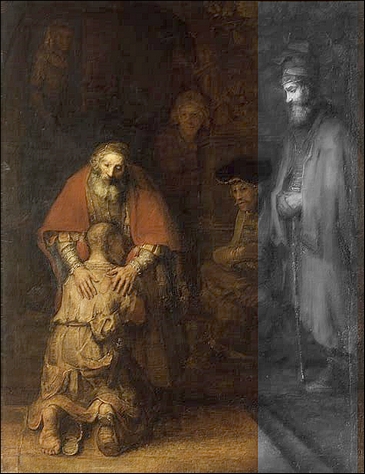 Inspired thought by way of inspired writing … the juxtaposition of the older brother referring to the father’s son against the father referring to the older brother’s brother. And such is the insight provided by Christ … Love is about how we perceive our relationship to others. Are they yours or are they mine? What is the significance of God being the Father/Parent of us all.
Are those people of another color to be considered my people?
Are those people who live within another nation’s declared borders to be considered part of my family?
Are those people who understand the faith in ways different from my own to be still considered as members of my family?
Are those people who stray away and squander their inheritance still to be thought as family?
In God’s Realm, in God’s household, God sees us all as family, though some members of the family disagree. And if God loves them as family, so ought we to love them as family.
But sadly … we are too eager to have them belong to someone else. And God is so disappointed when do.
In His Service always,
Fr. Charitas de la Cruz

 Here is one of those declarations of “I AM” found in the Gospel of John. Christ draws upon the image of the sheepfold, a place of refuge for the flock during the night when the wolves do prowl. I suspect the sheepfold was a wall of gathered stones with an opening for the doorway, sometimes with a gate, other times with but the bodies of the shepherds. As was Christ’s way, He used metaphors well-known in His place and time. (As I think we ought to do in our own place and time.)
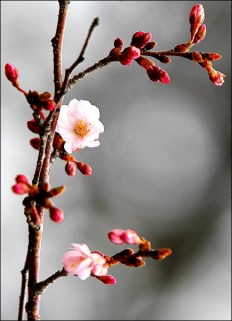 Cherry trees do blossom and rivers do shape the stones … for these are among the innocent parts of Creation in its becoming what it was meant to become. But with humanity, we tend to either retreat into the past or rush into the future … what we need is to allow the Present Moment to progress into tomorrow.
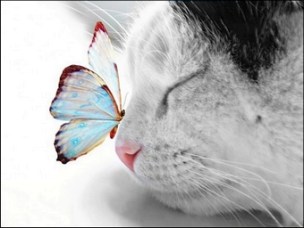 Gentle is an elusive word to define for the word itself is filled with its own definition. Dictionaries try to define “gentle” as mild, considerate, tender and kind; not harsh or severe. The King James uses the word “meek” but like so many other words in the English language the connotations of words change. So, I define “gentle” in terms of metaphors and usages … “a sparrow settles gently upon a branch”, “a gentle breeze stirs the leaves of the willow tree”, “a gentle rain has a whispering voice”.
 A cormorant has his wings outstretched, drying his feathers in the wind. This is not a time for flying, but a time for getting ready to fly. And the flying is for the purpose of fishing and the fishing requires getting his feathers wet. The rhythm of devotion and servanthood is much like what is required of the cormorant. Readying for the work and then plunging in, recovering from the work to ready to plunge in once more.
 I have observed this transition over and over again through my years of ministry. I watch people come searching for the water that will quench their unnamed thirst. I watch them then to sip from the still waters of the Spirit. I watch them bathe then splash in their baptismal waters. I then watch them draw water from the deeper realm of the well. And eventually I watch a spring of cool waters, heavenly waters, gracious waters, begin to flow forth from within them. It is the contemplative journey from the sensing of one’s thirst to the finding of the water that quenches that thirst. It is the contemplative journey that becomes intentional with one’s baptism, one’s commitment to the journey. It is the contemplative journey to desire learning of the deeper understanding of the ways of Christ and the Spirit. It is the contemplative journey into creative spirituality that allows the fresh, living water from heaven to flow through one’s own creativity of life.
 If in years to come, if they come, and you visit me in whatever place of care where I might abide, look not upon the stillness of my visage nor listen to the silence of my voice, but look into my eyes and imagine the dreams I am having there within my soul.
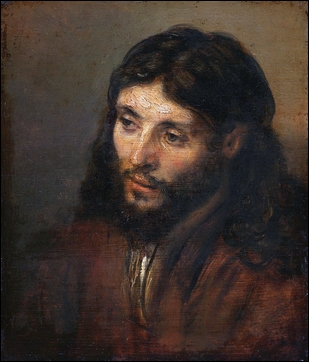 My understanding of my work of evangelism is not to make converts but to tell the Great Story of how a soul named Jesus of Nazareth was sent into this world in which we live to begin the process of heaven coming upon the earth and the process of the human and the Divine coming together as blended One. It is the Story, it is the retelling of the words of Christ, it is the introduction to the One who changed and still is changing my life to others who have yet met Him that is my work as Evangelist. Not making converts to my way of thinking but to allow them to hear Christ’s way of thinking. I live as best I can and with the help of the Lord … the way Christ would live my life.
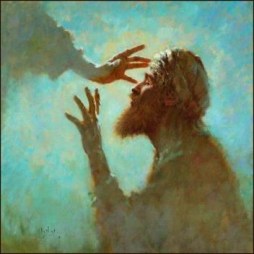 Christ approached a blind man and asked him, “What would have me to do for you?” The man answered, “I want to see!”
 Into the Sacred Hills of Jade